

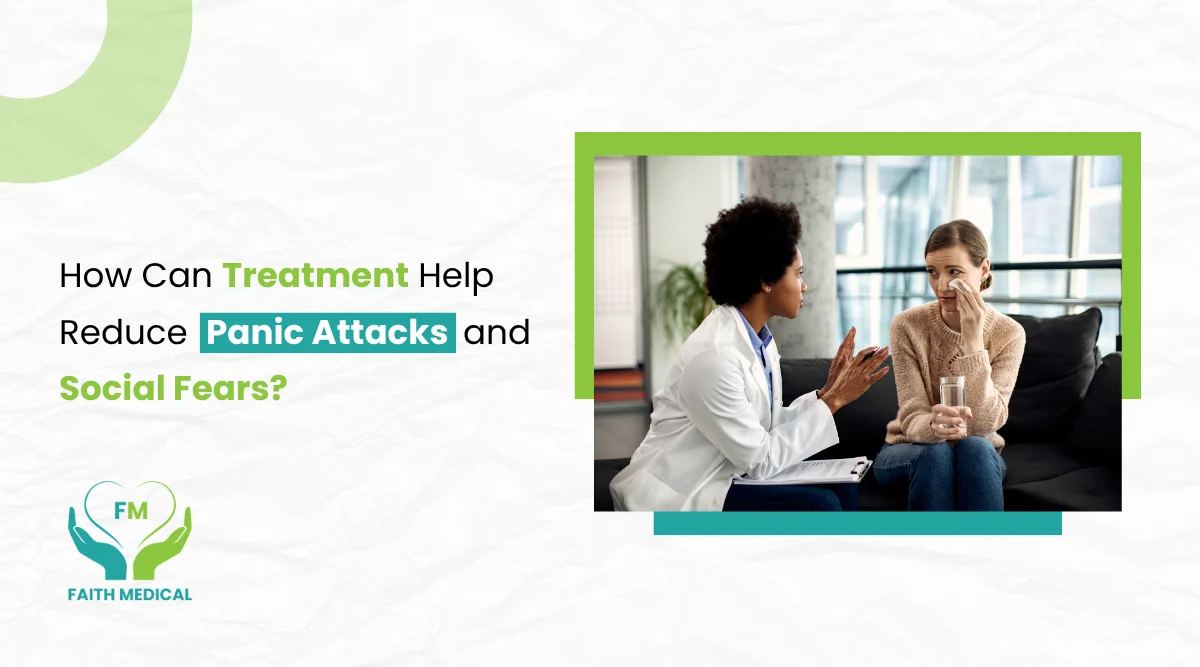
Do you feel your heart racing? Do you feel scared without reason? Do you get nervous around others? Do you worry about others’ opinions?
Many people feel this way. It can be scary. It can make you want to stay home. But there is hope. Treatment can help you feel better.
We offer individualized treatment plans at Faith Family Practice and Wellness Center for anxiety-related issues. We focus on the whole person. Our supportive environment is free from judgment, allowing patients to explore their concerns.
Let’s explore how treatment can reduce panic attacks and social fears.
What Are Panic Attacks?
Panic attacks are sudden, intense waves of fear that can occur anywhere. Symptoms include:
- Fast heartbeat
- Difficulty breathing
- Dizziness or shakiness
These feelings are real and indicate your body is on high alert.
Some people have panic attacks now and then. Others may develop panic disorder. This can disrupt daily life and create a cycle of fear and more attacks.
What are Social Fears?
Social fears, or social anxiety, involve intense apprehensions about social settings. You might dread:
- Engaging in conversations
- Eating around others
- Attending gatherings
You may feel afraid of being judged by others or fear making a mistake. These fears can be so strong that they keep you inside. You might avoid new friends and feel isolated. Social fears can affect your relationships, your education and your work life.
How Can Treatment Help Reduce Panic Attacks and Social Fears?
Treatment is a powerful tool. It may restore your life.
At Faith Family Practice and Wellness Center, treatment is personalized because every person experiences panic attacks and social fears differently.
Here are some ways treatment can reduce panic attacks and social fears:
Learning About Your Condition
Knowing about your condition is the first step in treatment. This is called “psychoeducation”. A therapist or doctor can teach you about panic attacks and social fears. It helps you understand that:
- Panic attacks are not dangerous, even if they feel scary
- Social fears are common and many people experience them
- Your feelings are a normal stress response
When you understand your condition, you feel less scared and more in control.
Facing Your Fears Slowly
An essential aspect of treatment involves confronting your fears step by step. This process is known as exposure therapy. You don’t face your greatest fear immediately. Instead, you begin with manageable actions. For example:
- Greet one person.
- Engage in a brief conversation.
- Join a small event.
Each action builds your courage and demonstrates your capability. With time, your fears may diminish in strength.
Learning to Relax
Treatment teaches you how to relax. When panic attacks hit, your body becomes tense. Learning relaxation techniques can stop panic attacks. These may include:
- Deep breathing practices
- Muscle relaxation, involving tensing and releasing your muscles
- Mindfulness, which focuses on being present
These strategies can help you achieve a sense of calm and control.
Taking Medication
Sometimes, therapy alone is not enough. Medication can help reduce symptoms of panic attacks and social fears. It can make your anxiety less intense and help you feel more stable.
Common medications include SSRIs (selective serotonin reuptake inhibitors), which balance brain chemicals.
Your doctor can talk with you about whether medicine may be right for you. Your doctor can also watch how the medicine works and check for side effects.
At Faith Family Practice and Wellness Center, medication management can be part of your care when it is a good fit for your needs.
Combining Therapy and Medication
For many, the best approach is a combination of therapy and medication. Together, they can help you feel better faster and stay better longer.
This dual approach attacks the problem from both sides, giving you the best chance of success.
Implementing Lifestyle Modifications
To effectively manage anxiety, adopting certain lifestyle changes can be beneficial. Key adjustments include:
Physical Activity
Regular physical activity can help increase brain chemicals that improve mood.
Healthy Eating
Eating a balanced diet provides important nutrients.
Adequate Sleep
Get 7-8 hours of sleep a night.
Limiting Caffeine and Alcohol
The elimination of these substances will lower anxiety.
Making these changes may aid your treatment and improve your overall health.
Why Personalized Treatment Matters
There is no single treatment that works the same way for everyone.
Your panic attacks and social fears may link to various thoughts, experiences, habits, stressors, or life situations. That is why personalized care matters.
Faith Family Practice and Wellness Center is here to help. Our mission is to provide caring, personalized and accessible care.
Faith Family Practice offers comprehensive psychiatric telehealth services, allowing you to receive care from home. You can have a video visit with a professional, which is both convenient and private. We provide:
- Evaluation and treatment
- Ongoing medication management
We specialize in treating panic attacks and social anxiety using evidence-based psychiatric treatment guided by proven medical research.
When to Seek Treatment
Contact a healthcare professional if you experience:
- Frequent panic attacks or social anxiety
- Avoidance of important activities
- Relationship issues
- Work or school disruptions
- Difficulty leaving home
- Ongoing worry about future attacks
- Daily challenges
Get help before anxiety escalates.
Conclusion
Panic attacks and social fears can be difficult; they can make you feel scared and isolated. However, treatment can help. It can inform you of your condition, alter your thinking and behavior patterns and teach you how to relax.
Faith Family Practice and Wellness Center provides individualized and caring treatment to help you minimize panic attacks and social fears. Help is available.
Call today to begin your path to healing.
FAQs
How do I tell my family or friends about my fears?
You can start by expressing your feelings: “I feel scared and need help.” Talk to a trusted person, like a parent or friend. They want to help. Ask your therapist for guidance.
Can panic attacks come back after I get better?
Panic attacks can return, but you can handle them. Use deep breathing and positive thinking. You’re stronger now and ready to cope.

No comment